
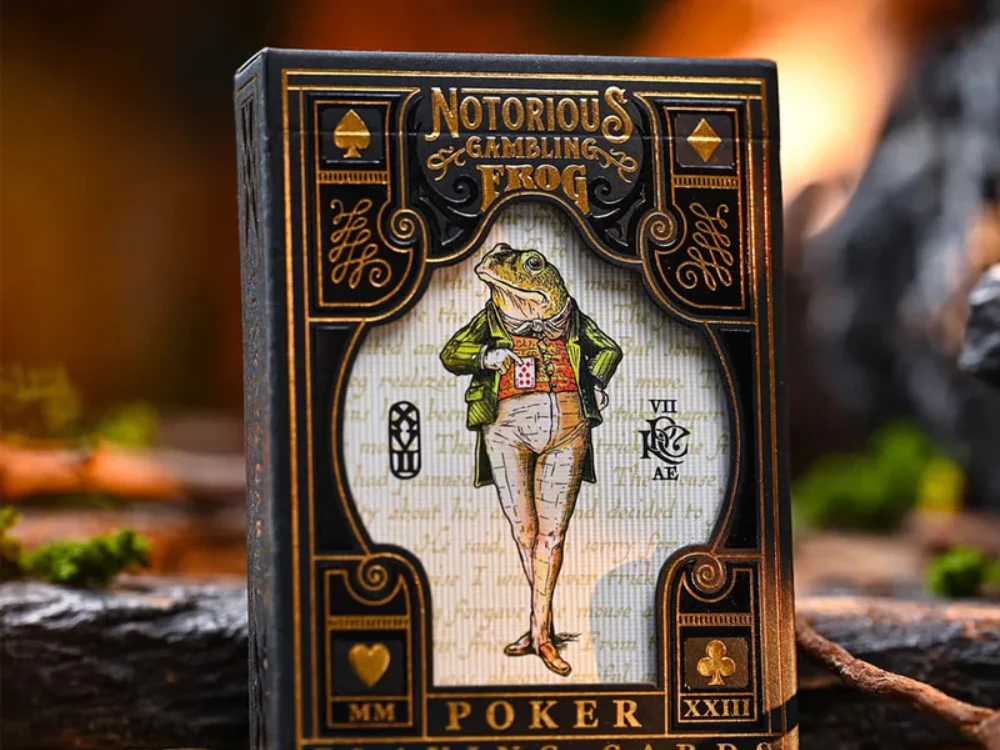

One of the problems we didn’t see coming when we got properly into decks was this: displaying playing cards is genuinely hard to get right. You want them out where you can enjoy them, because what’s the point of owning beautiful things if they live in a drawer forever, but you also don’t want your favourite deck slowly bleaching itself on a sunny windowsill.
We’re the sort of people who like being surrounded by the stuff we love. Books, Funkos, board games, graphic novels. Geeky, basically. But we’re also fussy about things looking neat. Not minimalist, not sterile, just… not chaotic. Decks sit in that awkward middle ground where they can look amazing on display, or they can make a room feel like a corner of a shop if you’re not careful.
So here’s what’s worked for us (sometimes learnt the annoying way) about displaying playing cards without wrecking them.
Sunlight
This is the boring bit, but it saves you from regret. Direct sunlight will fade paper and inks over time, and it doesn’t need to be full-beam “summer in Spain” sunshine either. Even a bright spot you don’t really notice can do it slowly.
If you want decks out, put them somewhere that doesn’t get direct sun. If you’re framing cards, go for UV-protective glass or acrylic. If you’ve got a shelf you love that gets blasted by daylight, use it for tuck boxes you’re less precious about, or rotate what’s out. It also gives you an excuse to “shop your own collection” every few weeks.
Clear display boxes
If you want decks on a shelf and you don’t want to be constantly dusting tuck boxes like they’re ornaments, clear acrylic display boxes are the simplest upgrade. They’re easy to wipe down, they stop little scuffs, and they make the shelf look intentional instead of “stuff perched on wood”.
We’ve got a couple of decks we’re protective over. Some because replacing them would be a pain, some because they’re personal favourites, and some because they’ve drifted into “rare playing cards” territory over time. Those live in protective cases. Bonus: everything looks cleaner, and you can still tell it’s a collection without it feeling cluttered.
Framing
Framing is brilliant when you’ve got a card face you genuinely want to see every day. A favourite Joke card, a gorgeous back design, or a court card that’s basically artwork. It turns a single card into wall decor without screaming “I COLLECT THINGS” at visitors.
If you frame, don’t just slap the card in and call it done. Use a mount so it’s not pressed against the glass, and try not to stick anything directly to the card. Photo corners are your friend. UV glazing is worth it if the frame is going anywhere near natural light.
You could do mini “sets” in frames. A couple of court cards, an Ace, a Joker, and one back design from the same deck. It looks considered, and you don’t have to narrate it like a museum guide.
Shadow boxes
Shadow boxes are the answer if you’re obsessed with the full package, not just the cards. Tuck box, seal, maybe a spare card or a little note if the deck came with something extra. It’s a nice way to display decks that feel special, but you don’t necessarily want to handle all the time.
This works especially well for decorative brands, where the tuck is half the point. We’ve got decks from stockholm17 that are too pretty to hide and it’s the same with Kings Wild Project, where the packaging often feels like part of the design story rather than just a box.

